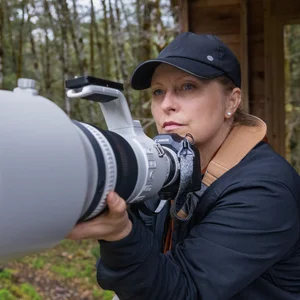
Newfoundland Puffins - with Travis Layton (Trav in the Bush)
Newfoundland, Canada | July 7-13, 2026
A Personal Review
Quick note before we start
This review is based on my personal experience, and someone else’s experience may look completely different. I review workshops through the lens of my framework and criteria, which you can read here:
If you’re curious why I do workshops and why I review them, you can read that here:
👉 https://www.mywildlifechronicles.com/journal/why-i-do-photography-workshops-and-review-them
At a Glance
With: Travis Layton - travinthebush.com
Type: Workshop
Primary Subjects: Puffins, Gannets, and Murres
Accommodations Included: Yes
Food Included: One of the B&Bs included breakfast and dinner for a few days. Meals were not included on the remaining days.
Group Size: 3
Shooting Schedule: Morning, Midday, and Evening
Physical Demands: Low to Moderate
Overall Feel: Calm, supportive, and jam-packed with things to do and see
Best Fit For: Photographers of all experience levels who want a workshop leader dedicated to meeting them where they are in their photographic journey.
Where This Was
This photography workshop took place on the beautiful island of Newfoundland in the province of Newfoundland and Labrador, Canada. Newfoundland is the island portion of the province, while Labrador is located on the Canadian mainland. The island covers approximately 42,000 square miles and is the 15th-largest island in the world. Newfoundland boasts the easternmost point in continental North America at Cape Spear, located on the Avalon Peninsula near St. John's, the province's capital and largest city.
This was my first time in Newfoundland and the farthest east I have ever been in Canada. I have heard Newfoundland compared to Ireland and read that it is "the most Irish place outside of Ireland." The landscape seems very similar to photos I have seen of Ireland and, if Ireland is rainy, wet, foggy, and windy, then I guess they have that in common too! Honestly, though, this place was beyond gorgeous!
More importantly, Newfoundland is home to some of the closest land-based views of the adorable, clumsy, and oh-so-photogenic Atlantic Puffin. Found at the Elliston Puffin Viewing Site on the Bonavista Peninsula, these pelagic cuties arrive around mid-May and typically depart in September, with the best viewing opportunities occurring in July and August. People come from all over the world to get up close to these birds, which spend most of their lives on the open ocean and only return to land to breed. Because they spend the majority of their time far from shore, puffins are considered pelagic, a term used to describe animals that live primarily in the open sea.
How can you be in Newfoundland without visiting the third-largest Gannet colony in North America? Located at Cape St. Mary's Ecological Reserve, this colony is home to 20,000 to 30,000 breeding pairs of these elegant-looking seabirds, which return to Newfoundland's shores each year to raise their young on the reserve's dramatic cliffs.
And let's not forget the Murres. Newfoundland and Labrador's murre population accounts for approximately 90% of North America's, and you can see thousands of them when visiting Cape St. Mary's. And yes, murres spend most of their lives at sea as well.
In a nutshell, Newfoundland is a pelagic seabird hotspot during the summer months, and I can now say from firsthand experience that these birds did not disappoint!
Why I Chose This Workshop
This section is pretty easy for me to write. I actually signed up for this trip while I was still in the middle of the very first photography workshop I had ever taken, which just so happened to be with Trav in the Bush. My experience at his 2025 Bald Eagle Workshop (see my review here) was so good that I immediately grabbed a spot on his 2026 Newfoundland Puffins workshop. Before the eagle workshop was even over, I knew I wanted to travel with Travis again, and the opportunity to experience the east coast of Canada was just too good to pass up.
Trav in the Bush - Bald Eagle Workshop in Campbell River, BC
If I'm being completely honest, when I signed up for this workshop, I knew next to nothing about puffins. In fact, I distinctly remember Travis telling me about the trip during his Bald Eagle Workshop, and I am pretty sure I had to Google what a puffin even looked like. Unlike many photographers who travel to Newfoundland specifically for these quirky little seabirds, puffins weren't even on my newbie wildlife photography radar.
So why did I sign up? Simple. I was signing up for Travis, not the puffins.
My experience at his Bald Eagle Workshop was so overwhelmingly positive that I didn't need much convincing. I loved his teaching style, appreciated how hard he worked to make sure everyone had a great experience, and genuinely enjoyed spending time with him and his wife, Karen. When he mentioned the Newfoundland trip, I did what I often do when I get excited about something. I went all in and reserved a spot.
As the months rolled by, my interests started shifting. The deeper I got into wildlife photography, the more obsessed I became with mammals. Bears, foxes, bison, moose...those were the subjects that were getting me excited to pick up my camera. I would be lying if I said I never questioned signing up for a puffin workshop. There were definitely moments when I wondered if I should have spent the money and vacation time photographing the mammals I was growing to love instead.
Even during those moments of buyer's remorse, however, I never lost my excitement about returning to the field with Travis and spending another week with both him and Karen. As it turns out, all of that second-guessing disappeared the moment a goofy little puffin waddled to within a couple of feet of me. One look at that colorful beak and perpetually confused expression, and I was hooked.
Workshop vs Tour, and How That Shaped the Experience
Before I talk specifically about this trip, I think it's important to explain how I view workshops versus tours, because they aren't the same to me. When I sign up for a workshop, I'm not just looking for someone to get me in front of wildlife. I'm looking for someone who can help me become a better photographer. I expect teaching, feedback, and support in addition to access to great subjects. A tour may offer amazing access, but a workshop should also provide learning opportunities.
Puffins in Newfoundland with Trav in the Bush was absolutely a workshop.
You can tell that Travis genuinely loves to teach and wants everyone to get the most out of their time in the field. What I appreciate most about his teaching style is his ability to meet photographers where they are. Whether you're brand new to wildlife photography or have years of experience under your belt, Travis adapts his guidance to fit your goals, interests, and skill level.
Travis and Bob - Elliston Puffin Viewing Site, Newfoundland
One of the things I love about Travis is that he encourages photographers to explore and experiment rather than simply copy what he does. There were several times during the trip when he encouraged me to try something new and then patiently talked me through the process until I could see and visualize the image for myself. Those moments are often where the biggest growth happens.
Our group represented a variety of experience levels and shooting styles. Despite that, Travis moved seamlessly among us throughout the day, answering questions, offering suggestions, and helping each of us push our photography in directions that aligned with our individual goals rather than encouraging us to create the images he would have made himself.
We also had a classroom-style session during the workshop where we reviewed a selection of images from the trip. I found this especially helpful because it provided an opportunity to receive feedback while we were still in the field. If there was a technical issue, compositional challenge, or creative direction that needed adjusting, there was still time to make those changes during the remaining shoots.
Overall, the teaching experience was fantastic. If you are looking for a photographer who is passionate about teaching, invested in his clients' success, and skilled at adapting his instruction to different experience levels and creative goals, I would not hesitate to recommend Travis.
Ethics
A few situations came up during this workshop that pushed me to think a little harder about my own wildlife photography ethics. Wildlife photography can get messy when it comes to ethics, and not everyone is going to draw the line in the same place. What I appreciated in both situations was that Travis was willing to have the conversations, listen to different perspectives, and put the animals' welfare first.
In the first situation, Travis booked a very popular local birding guide to take us out for a couple of hours. It quickly became apparent that the guide used playback, recorded bird calls, to attract birds into the area.
To Travis' credit, he seemed just as uncomfortable with the situation as I was. He checked in with me almost immediately, apologized for not knowing playback would be used, and asked if I wanted to leave. I appreciated that he would let me make that decision for myself.
In the end, I decided to stay.
Part of the reason was that I didn't want to impact the experience for the rest of the group. The other reason was pure curiosity. Wildlife photography has no shortage of ethical debates, and playback is one of them. Up until that point, I had never experienced it firsthand. I found myself genuinely wondering how I would feel after seeing it in action. Would I walk away thinking it wasn't a big deal? Or would it bother me more than I expected?
By the end of the outing, I had landed squarely in the second camp.
What made it confusing was that I actually enjoyed the outing. The location was beautiful, the birds were wonderful to see, and I had a genuinely nice time. The issue wasn't the experience itself. It was watching birds repeatedly respond to calls that weren't coming from other birds. By the end of the outing, I found myself feeling sorry for the little guys as they kept flying in looking for something that wasn't there and changing their normal behavior.
That's what made this one such an internal tug-of-war for me. I liked the tour. I disliked the method.
In the end, the experience clarified where I personally stand on playback. If a future tour disclosed that playback would be used, I would choose not to participate. That doesn't mean everyone has to agree with me, but it did help me better understand where I stand on this particular method. Did I walk away disgusted with the idea? No. It just was not for me.
Afterward, Travis and I ended up chatting about the experience for a bit, as you could tell it was weighing on him as well. I appreciated that he didn’t brush the conversation off; rather, he was open to the discussion, and I felt free to talk about how I felt. He mentioned that he had decided to discontinue the use of that guide for his upcoming workshops this year (we were the first group of Travis’ workshops in Newfoundland), and the guide would not be used in the future. He noted that he felt incredibly uncomfortable putting guests in that situation, and he would not let that happen again. I would believe him on that.
The second example highlighted a different ethical consideration.
While we were in Elliston, a fellow photographer whom both Travis and I knew shared a tip about a fox den located near the puffin viewing site. As Travis and I often joked throughout the trip, I tend to be "mammal-forward.” So the possibility of photographing a fox family in Newfoundland immediately excited me.
After our evening puffin session, we decided to stop by the location to see if we could find it for a possible shoot the following day. It didn't take long to locate the den. At first, no foxes were visible, but just as we were getting ready to leave, a larger kit appeared. Needless to say, I was thrilled.
At about five minutes in, a few of us were so in the moment that we didn't realize we had drifted right into the path back to the den. Travis quietly pointed it out and suggested we move so the little guy could come and go more comfortably. Note to self: pay better attention no matter how excited you are about your subject.
We stayed only a short time before leaving, not wanting to overstay our welcome, and planned to return the next day.
What made the location so appealing was the habitat itself. The den was surrounded by beautiful tundra-like vegetation, and before long I was already envisioning the environmental images I hoped to create. The next morning, both the kit and its mother were present, and it was wonderful to watch them interact. Unfortunately, they spent most of their time near the roadside rather than in the landscape I had been dreaming about photographing.
Even so, I wasn't ready to give up on the idea.
Later that day, Travis and I decided to stop by one more time. As we approached the location, another person was driving in front of us, and they slowed down as we neared the den site. It was clear they were going to the same place we were. Then we saw another car parked at the den.
That was the moment my perspective shifted.
Up until then, I had convinced myself that we had stumbled upon a relatively unknown location. Looking back, I'm not sure why I thought that. The foxes were clearly accustomed to people. Still, because we had encountered no other photographers during our two visits, I had assumed the area wasn't seeing much pressure.
Seeing another vehicle parked directly at the den and another car clearly heading there in front of us immediately changed that assumption.
The site itself wasn't large, just a small pullout with a den nearby. It hit me that this fox family was likely dealing with a steady stream of photographers coming through their backyard daily. My excitement over the images I hoped to create gave way to a different feeling entirely. I felt terrible for being part of the disruption, even though I hadn't realized it at the time.
Travis and I talked about it afterward and ultimately agreed that we wouldn't return.
I'll admit that wasn't the outcome I wanted. I had already imagined the photographs I hoped to make and was struggling to let them go. But sometimes wildlife photography asks us to choose between the image we want and what we believe is best for the animal. For me, this became another one of those moments.
Like the playback situation, it didn't leave me angry or judgmental. It simply tested my boundaries and helped me better understand where those boundaries are.
Looking back on both situations, what impressed me most was how Travis handled them. In neither case did he tell anyone what they should think or where they should draw the line. Instead, he listened, encouraged discussion, and consistently put the welfare of the animals ahead of getting a photograph. Whether it was checking in with me when playback unexpectedly became part of an outing or deciding that the fox family didn't need any additional pressure from photographers, I felt that his decisions were guided by what was best for the wildlife rather than what might produce the best images.
Time of Day and Light
Unlike Travis' Bald Eagle Workshop, we weren't heavily constrained by tides or by the amount of daylight needed to get boats in and out of shooting locations safely. Except for one boat outing early in the workshop, we had much more flexibility in how we spent our days.
As you would expect, priority was always given to the best golden-hour light in both the morning and the evening. As you will read about in the "When Things Didn't Go as Planned" section, the golden-hour gods did not shine upon us but only once for a brief moment during our first night at the gannet colony, but we still made it out on location like we might catch a break in the clouds during golden hour each and every morning and evening! But the lack of sun gave us a great opportunity to practice in overcast, rain, and fog which all have their photographic benefits.
The few moments at the gannet colony when we got a glimpse of the setting sun.
But if you were expecting a workshop that only shot during the early mornings and late evenings, you would be quite surprised.
Travis and Karen kept us moving throughout the day with a variety of activities, locations, and photography opportunities. Sometimes the goal was simply to keep shooting. Other times it was an opportunity to work on different techniques, compositions, or creative approaches when the light was less than ideal. There were even some cultural activities sprinkled in.
Of course, every outing outside of the primary golden-hour sessions was optional. If you wanted to take a break, download cards, review images, or relax for a bit, you certainly could. That said, if you are the type of photographer who prefers to maximize every opportunity, Travis and Karen always seemed to have something planned.
This definitely was not a workshop where you spent the middle of the day sitting around waiting for the next sunrise or sunset shoot. There was plenty of downtime available if you wanted it, but there was also no shortage of opportunities to keep shooting and learning throughout the day.
Accommodations and Food
This section would normally be a little more detailed, but in a destination like Newfoundland, a lot of the value a workshop leader provides comes from the countless hours spent researching locations, accommodations, and logistics. Out of respect for the work Travis and Karen put into building this experience, I'll keep the specifics fairly general. If you would like more information, I encourage you to contact them directly.
From the left: me, Gaetan, Karen, Travis, and Bob
I will say that Travis and Karen did a fantastic job selecting places for us to stay. Because we were visiting several small towns throughout Newfoundland, I honestly expected some of the accommodations to be a little rough around the edges. Instead, I found them to be clean, comfortable, welcoming, and full of character. Every place we stayed felt thoughtfully chosen and fit the overall experience well.
As for the food, while it certainly wasn't the reason I signed up for the trip, I was pleasantly surprised by how much I enjoyed it. Travis and Karen consistently selected great restaurants, and I never struggled to find something I wanted to eat. We also spent a couple of days at a wonderful B&B with an on-site chef who prepared several meals for us. Those ended up being some of my favorite meals of the week.
Overall, I thought the accommodations were charming, the food was great, and Travis and Karen did an excellent job keeping us comfortable while we focused on what we came to Newfoundland to do... photograph wildlife.
Group Size and How it Affected My Experience
Travis' workshops are what I would call a true small-group experience. Including myself, there were only two other participants. This made for a very intimate workshop with plenty of access to Travis whenever questions came up or extra help was needed. With only three participants, it was easy for him to keep track of everyone and make sure each of us was getting what we wanted from the workshop.
For me, the small group size was one of the biggest advantages of the workshop. If I had a question, I asked it. If I wanted feedback on an image, I got it. There were only three of us, so I never felt like I had to wait around for Travis or worry that someone else was taking up all of his time. It was easy to have conversations, ask for help, and move on to the next thing.
Another benefit of having only three participants was the flexibility it afforded. It's a lot easier to change plans with three people than with a group of ten. We took advantage of that a few times during the workshop, and I think it helped us get the most out of the conditions and opportunities we were given.
Logistics and Feeling Cared For
This is an area where both Travis and Karen really shined. From the moment I signed up, it was obvious that they put a lot of thought into their guests' experience.
Communication before the workshop was excellent. Yes, I'm one of those workshop participants who always has pre-trip questions, but honestly, most of them were answered in a detailed PDF that arrived at exactly the right time before the trip. It covered everything from logistics to packing recommendations, along with answers to questions I didn't even know I had yet.
Karen taking a spin with Travis’ camera!
Communication during the workshop was also concise and timing appropriate. You never had to wait around thinking…now what time did they say to meet at the van?
More than anything, though, there was a genuine sense that Travis and Karen wanted their guests to be comfortable and enjoy themselves. It showed up in a hundred little ways throughout the week. Whether it was helping with bags, checking that everyone had what they needed, or quietly taking care of details behind the scenes, there was a constant feeling that someone was looking out for us.
While Travis was focused on helping us create images in the field, Karen was often in the background making sure everything else ran smoothly. She was confirming reservations, double-checking schedules, and adjusting plans when needed. On several shoots, she came along and kept an eye on our bags while we wandered the area looking for subjects and backgrounds. That may sound like a small thing, but not having to worry about my gear made it much easier to focus on photography and be creative. She even picked up a camera herself one morning!
Looking back, I think the biggest compliment I can give them is that I never had to think much about the logistics. Everything just worked. And I felt incredibly cared for.
When Things Didn’t Go as Planned
Ugh. The weather.
Travis and Karen have obviously not figured out how to control that yet. We spent six days together and didn't get but one small break in the clouds during our first evening shoot. No golden hour. No dramatic sunrise. Just fog, clouds, mist, rain, and more clouds. I guess that's Newfoundland.
What impressed me was that Travis never stopped trying. We were always in the right place at the right time in case there was a break in the weather and some beautiful light decided to make a brief appearance. Unfortunately, Mother Nature had other plans.
More importantly, though, Travis didn't spend the week lamenting the conditions or wishing for something different. He embraced what we had and encouraged us to do the same. He understood that while golden light is wonderful, fog, rain, and overcast skies can create their own opportunities. I have some beautiful images from the trip that were made in exactly those conditions.
While we never got the beautiful puffin in sunrise or sunset Newfoundland shots that I had hoped for, we did get the Newfoundland weather that actually exists. After giving it some more thought, I think the fog, mist, and moody skies became part of the experience and part of the story.
Foggy morning at the gannet colony in typical Newfoundland weather.
Reflection
Looking back on the week I spent with Travis and Karen, there really weren't any surprises when it came to the workshop itself. Being that this was my second workshop with them, I already knew things would be well organized and thoughtfully planned. Just like his 2025 Bald Eagle Workshop, I never found myself wondering what was next, where I needed to be, or whether something had been overlooked. That's simply what one can expect from Travis and Karen. That doesn't mean everything went perfectly or that we didn't have to call an audible now and then. It just never felt chaotic.
Going into this workshop, I had all kinds of expectations for the images I wanted to create. I was hoping to come home with at least one photograph for each of the galleries on my website. One of those galleries, The Edge of Light, is dedicated to wildlife photographed in beautiful sunrise and sunset conditions. Not for one second did I think that would be the gallery left empty after a puffin workshop in Newfoundland. Silly me. We had eight different morning or evening opportunities, and I just assumed we'd get at least one decent break in the clouds. Apparently Mother Nature had other plans.
Travis and Karen Layton
I'll admit, I spent much of the week checking weather forecasts and hoping tomorrow would be the day. It didn't help that photographers from the week before us were beginning to post glowing puffins bathed in gorgeous golden light. Woe is me. Such terrible workshop problems to have.
But something changed once I got home and started spending time with the images.
With every culling pass, I found myself appreciating the photographs I did get a little more. The gannets disappearing into deep fog. The goofy little puffins with their oversized personalities. And the murres. Oh my goodness, the murres. Who would have thought? If someone had asked me before the trip which species I'd be excited about, murres probably wouldn't have even made the list.
I also spent a good chunk of the week thinking about how much Trevor (the hubs) would love Newfoundland. Every time we passed a marina or a harbor full of fishing boats, I found myself wishing he was there. He would have talked every fisherman's ear off before the trip was over. I have a feeling we'll make it back there together one day.
Overall, I couldn't have been more pleased with this workshop. More importantly, I left with a collection of images I genuinely love, a deeper appreciation for a part of Canada I had never visited before, and a new found fondness for a goofy little seabird that wasn't even on my radar when I signed up.
Would I recommend this workshop to others?
Without hesitation.
And to Travis and Karen, thank you for another wonderful adventure. I have a feeling our paths will cross again.
A few shots from my time in Newfoundland with Travis:
Read my workshop review framework:
Read why I do workshops and why I review them:
https://www.mywildlifechronicles.com/journal/why-i-do-photography-workshops-and-review-them