Learning to grieve a landscape
I knew this was unavoidable.
I slipped on my old hiking boots, choosing them specifically because I didn't want the soft, dark residue of the fire covering my good hikers. I'd been putting off this hike for days since our return home. Part of it was the chaos at home, contractors coming and going as we worked through the aftermath of the fire. But if I'm being honest, that wasn't the real reason.
I didn't want to accept that it was gone.
These trails had been my solace, my breath, my quiet for the last eight years. They had seen me through stressful workdays, early mornings with a camera in hand, and countless miles of wandering without any destination in mind. Now I was about to see them for the first time since the fire, and I wasn't sure I was ready.
I didn't know how my body would respond, what my eyes would process, what my ears would hear.
But it was time.
Murphy, my boxer and longtime hiking buddy, was giddy with excitement as he recognized the routine. The boots, the fanny pack full of water, and the ruck plate I religiously wear on my back every time we go hiking.
I love the feeling of weight on my back and the lightness that comes with removing it after a long hike. Symbolic perhaps. Maybe that's part of the reason these hikes have become so important to me over the years. And why these woods have become part of who I am.
Murphy danced circles around me while I got ready. To him, it was just another hike. To me, it felt different.
I started up the switchbacks behind our house that connected with the park’s trail system. The ones Trevor built so lovingly for me after we bought our small piece of property. In fact, the trail was built before our house was even ready for us to move in.
The biggest selling point of this little slice of heaven? It butted right up against beautiful Riverside State Park. I could walk right out the back door and hit the trail whenever I wanted. No loading up the dogs and driving to the woods in the early morning. There were 9,200 acres of wooded trails just a few steps beyond our back porch.
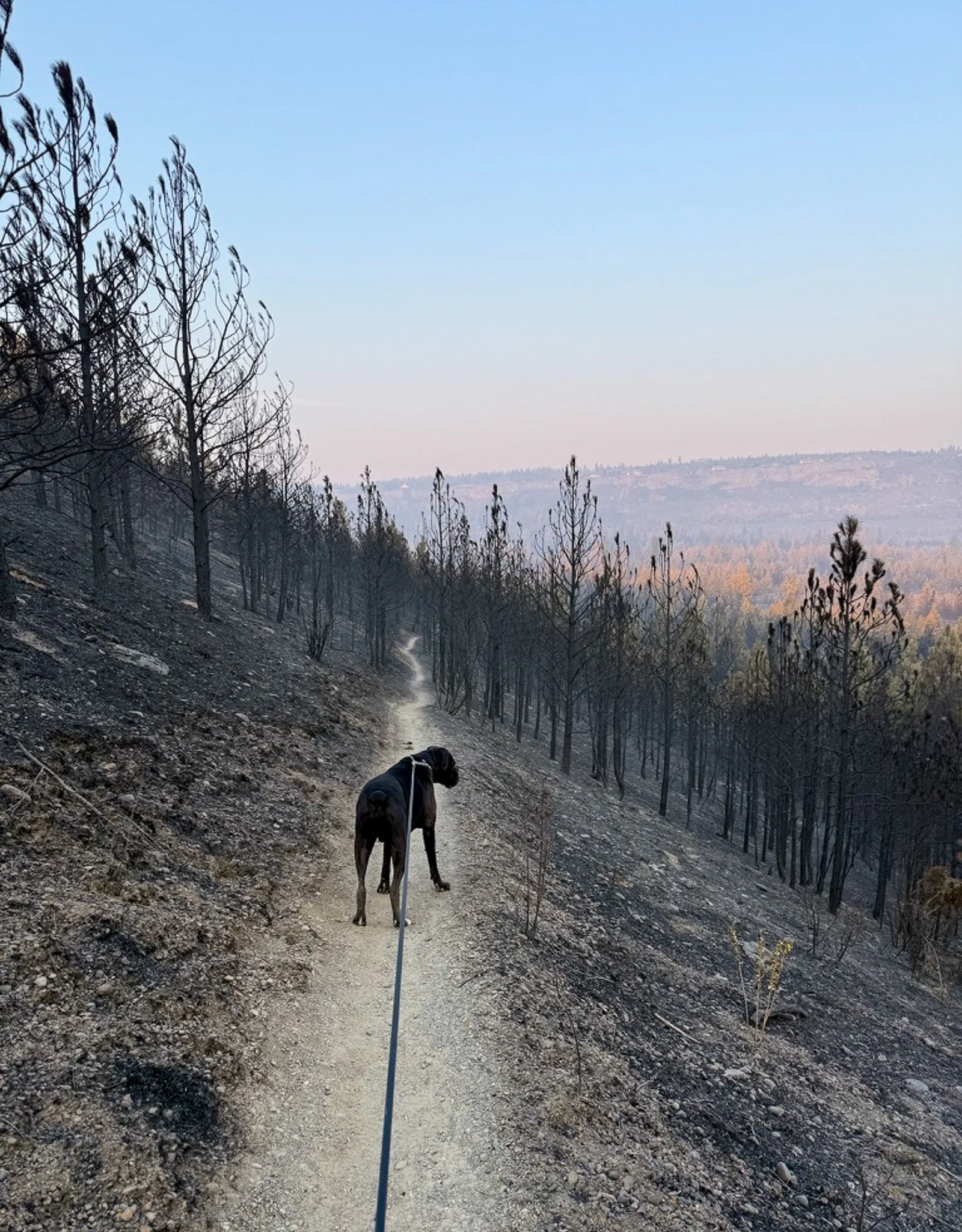
The fire had come so close to our home that it only took a few minutes before the trail I'd hiked hundreds of times was framed by piles of ash. I headed slowly up the hill, dreading what I would see when I reached the top and took in the panoramic view for the first time.
When I finally reached the overlook, I stopped. What I saw took my breath away.
August 1, 2026, will be a day that I will never forget.
The day was hot, dry, and, as forecasted, very windy. Meteorologists had been warning about the conditions for days. An extreme fire danger day. I wish I could say those warnings were unusual, but with the climate shifts we're experiencing, they're becoming more common.
I was heading home from my oldest daughter Kolbi's house after a wonderful morning with family when I saw the large plume of smoke in the distance. About an hour earlier, I had read that a fire had started west of us in Airway Heights, but it seemed far enough away that I wasn't particularly concerned for our safety.
Poor assumption on my part.
As I rounded the corner toward our house, I could see flames along the top of the ridge across the Spokane River, just a few miles from home. I pulled into the driveway and immediately started the sprinkler system Trevor had designed for this exact situation, watering the hill behind our house. I began spraying down our home while talking to Trevor on the phone as he raced home from a Saturday afternoon golf game.
"Get here as quickly as you can. I think the fire has jumped the river."
Over the next half hour, the fire moved with a speed and intensity that was difficult to comprehend. What had started miles away quickly made its way toward our neighborhood. By the time I left, I could see the flames at the end of our block. How did this happen so quickly?
I left with Murphy, and Trevor stayed behind to help save our home.
The fire ultimately came within a few feet of our house. A shift in the wind, the incredible work of firefighters and my husband, and more than a little divine intervention spared our home. Many others were not as fortunate. Over 800 structures were destroyed, most of them homes. Entire neighborhoods were gone. Thousands of acres of forest and wildlife habitat burned in a matter of hours, including much of the landscape I had spent years exploring. What had started as a plume of smoke on the horizon had become one of the most devastating wildfire events our community had ever experienced.
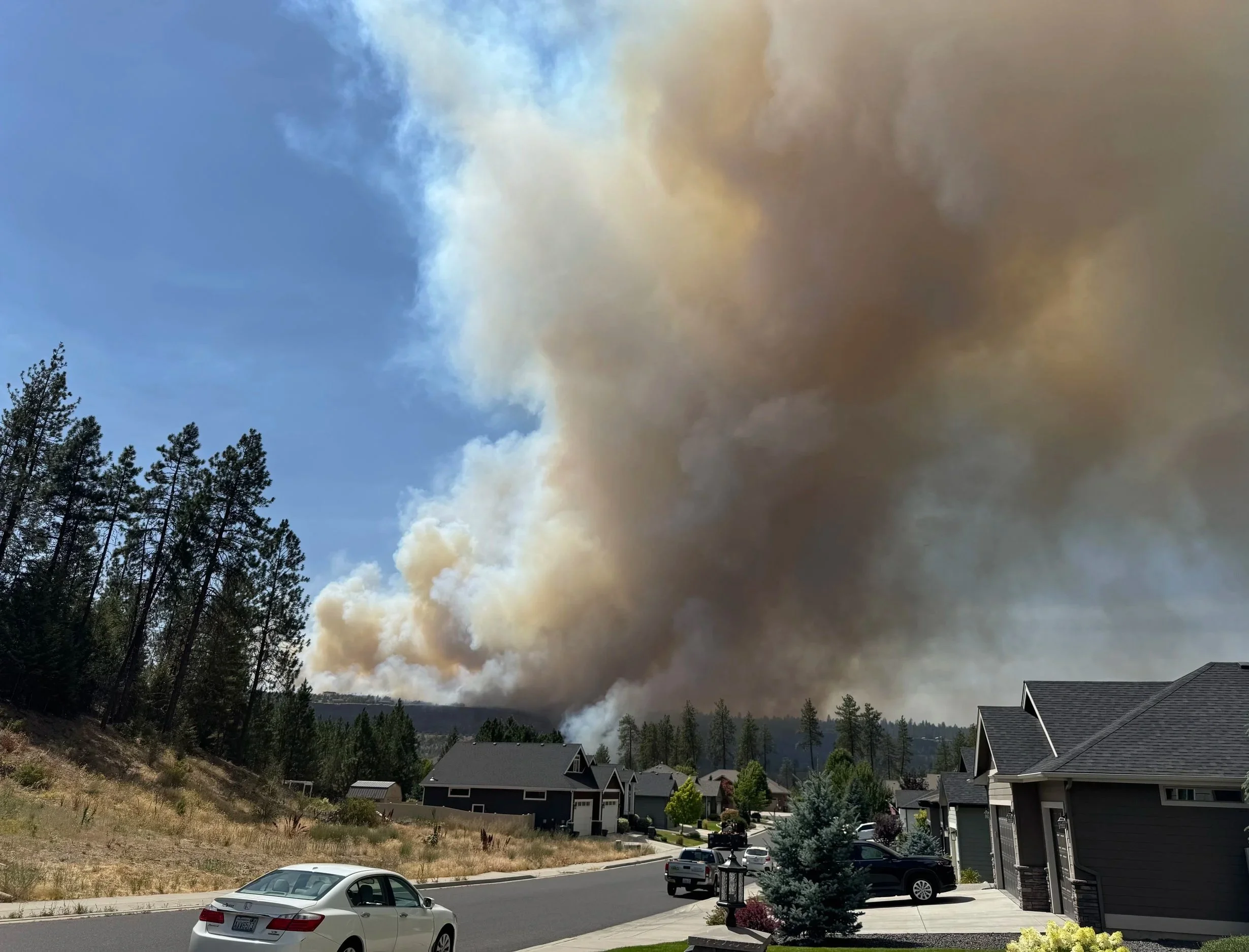
Plume of smoke taken from across the street from our house.
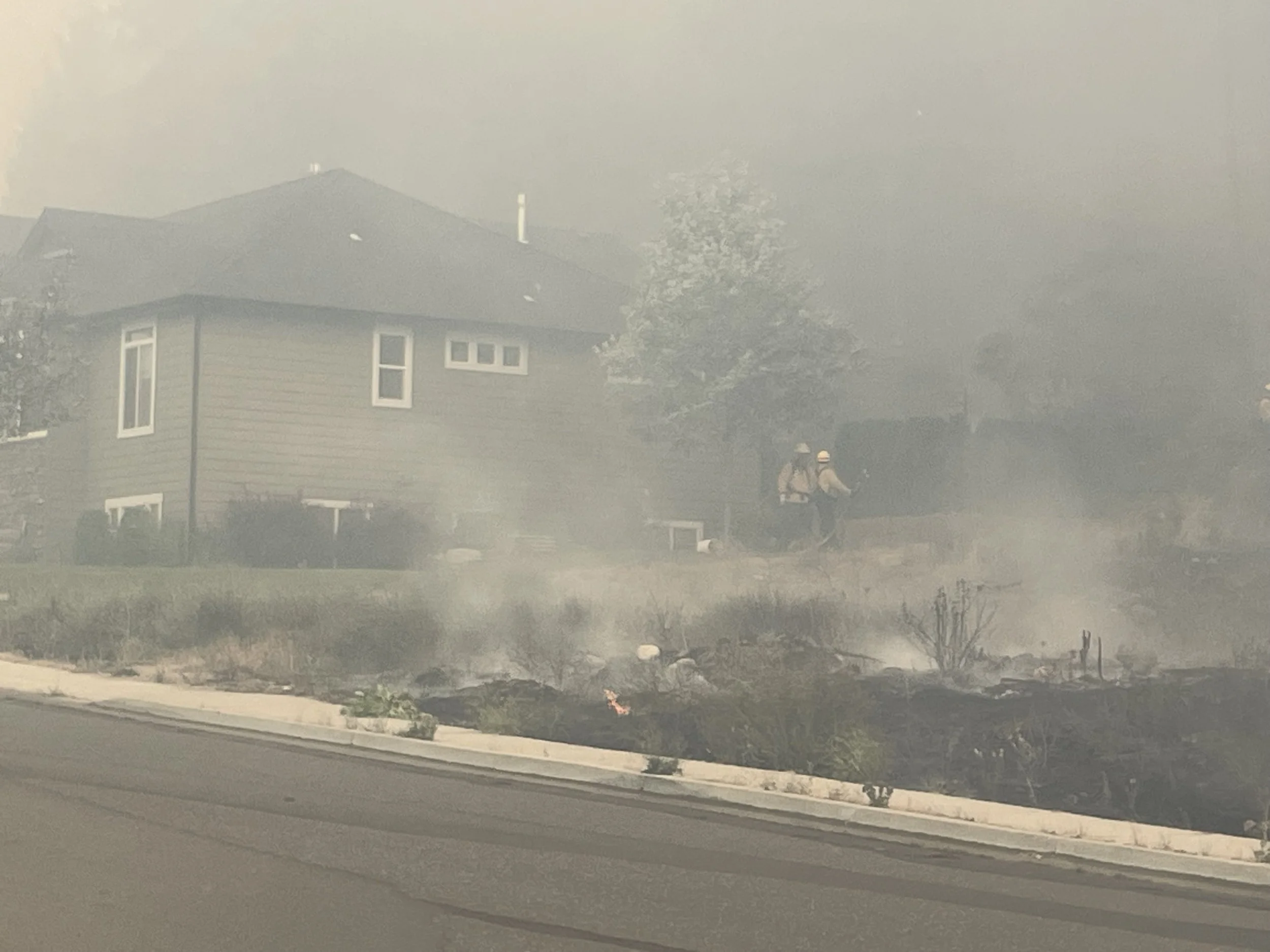
Our home right after the fire had been stopped from reaching it.
In the weeks that followed, we dealt with the aftermath. The extended evacuation period. The return home. Smoke damage. Contractors. Cleanup. Gratitude that our home was still standing. But while our house survived, the landscape surrounding it had changed forever.
I stood frozen on the bluff. It took a moment to make sense of what I was seeing.
The brown, worn trails stood out like a sore thumb against the dark ash and blackened trees surrounding them. The trails that had once felt like part of the natural color palette of the woods now looked like leading lines driving through the landscape.
The trees in the valley below weren't completely charred like many of the trees lining the trail to the bluff, where every trace of foliage had been burned away. Instead, portions of the treetops remained. From a distance, the ponderosa pines and Douglas firs almost looked deciduous, as if they were in the middle of a fall color change.
Murphy looked as unsettled as I felt. He kept stopping and looking around. Every few steps, he would pause and glance back at me before continuing down the trail. Gone was the thick underbrush he was used to seeing. The bushes he stopped to sniff every time we walked the trail. All gone.
The forest floor was all that remained. A monochromatic scene of gray and black. No evidence of what was once there.
As I continued on the trail, I found myself worrying about the countless animals that had called these woods home just weeks before. The ones that showed up so frequently that I almost counted on seeing them during a morning hike. The beautiful mule deer herd that often watched me from a distance as Murphy and I passed by. The black-capped chickadees, western bluebirds, and the flighty little red-breasted nuthatches that brought life, sound, and movement to the trees around me. The gorgeous coyote that always seemed to appear when I didn't have my camera, yet remained elusive when I did.
I looked out across the burned landscape, and I couldn't help but think about all of the places in this park they called home. My heart broke for what the fire had taken from them, and I prayed they had been able to flee to safety.
I descended the bluff to the flats below, not too far from the Spokane River. Though I knew they would not be there, I took the trail that led to the area where I would usually find our resident muleys. Maybe I wanted reassurance that the worst had not happened. That they had been able to flee the aggressive flames.
I needed to know if I had to add them to the list of loved things I needed to grieve.
The trails were eerily quiet. Gone were the songs of those woodland birds that gave my steps weight and made the vastness of the forest feel more intimate.
Nothing.
Not a single song.
This was going to be harder than I thought.
Murphy and I wound through the trails of the now see-through forest until we reached the stretch of land where I had taken thousands of photographs of the cute little mule deer families. I stood quietly, scanning the area, unsure whether I was sad or relieved to see no evidence of life. But I saw no evidence of death either.
It felt less like I was hiking and more like I was mourning.
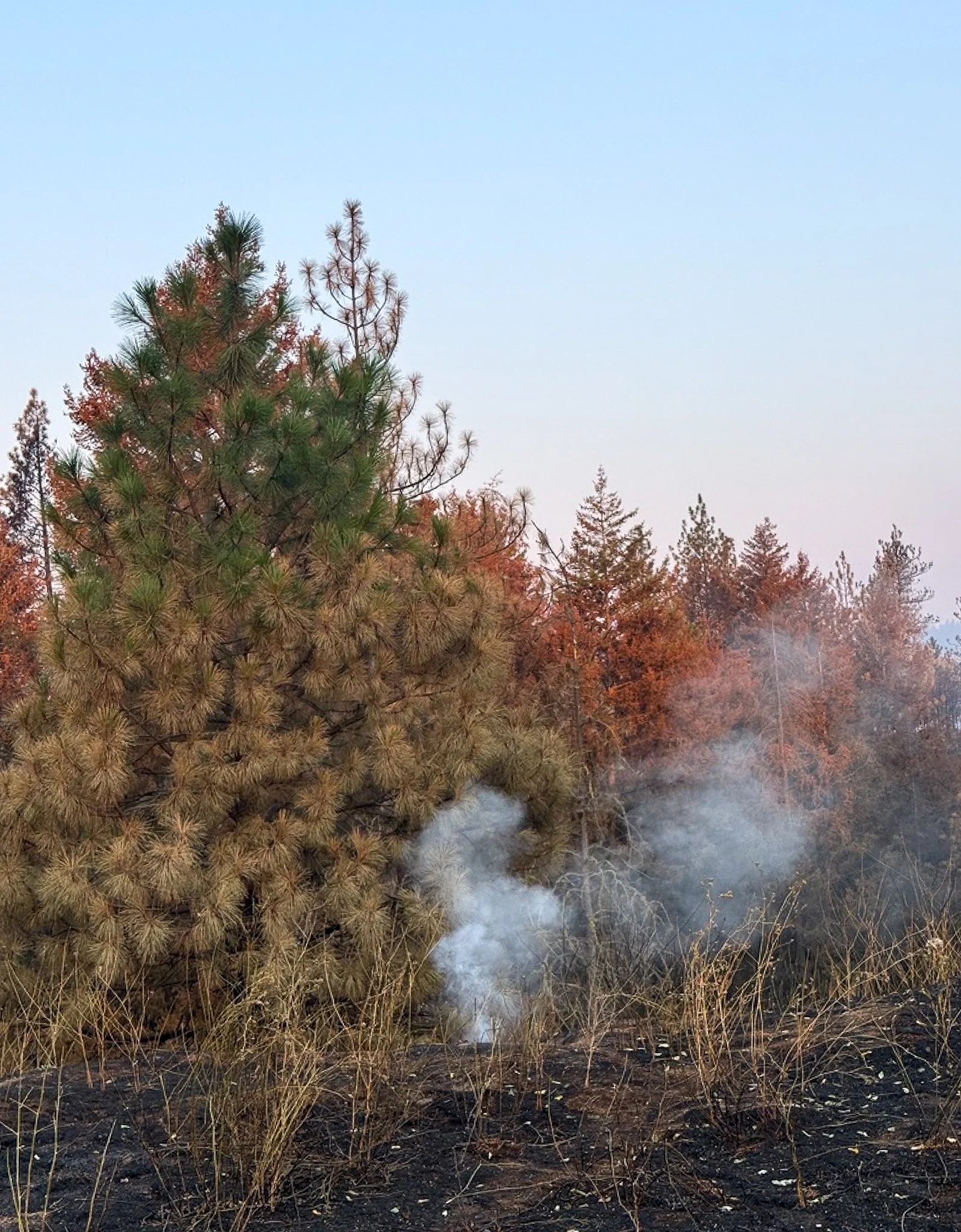
Murphy and I wandered the trails for another hour, taking stock of the place that had become so important to us. My heart felt like it was in a vice as we passed the only hot spot we saw all morning. Smoke slowly billowed out of the hollow left behind by an old dead tree. It was a reminder of how fresh this all was.
It was time to head home. We'd seen enough, and now it was time to begin processing it all. But how was I supposed to do that when the trails I had used to work through so many of my problems, ideas, and decisions were now the source of my grief?
These trails had been my therapist.
The days that followed that hike were as much of a whirlwind as the two weeks before it, as we tried to find some degree of normalcy. Contractors continued to come and go, and I struggled to juggle my work life with my chaotic post-fire personal life.
I longed for the days of routine. Of predictability.
But the thoughts from that hike lingered in the background. I did feel a touch better having experienced firsthand the impact of the fire on the place that felt like an extension of my home. No more wondering what it looked like. Now I knew. And somehow, knowing gave me a place to start. A foundation to begin building from. To at least begin the healing process.
I couldn't stop thinking about the wildlife. About their home. About how long it would take for the land to recover from something so devastating. I knew fire had always been part of this landscape, long before any of us lived here. But knowing that didn't make it any easier to see.
I needed to get back out there. To look for evidence of life. Not just four-legged life, but signs that the landscape itself was still alive. I grabbed my camera and headed out. Hikes feel different without Murphy, but I knew I had to do this one by myself.
My camera would be my only companion this hike.
As I hit the flats at the bottom of the bluff, I turned in the opposite direction from where I had gone the day I searched for the muleys. I had heard a rumor that the herd had been spotted outside of my traditional stomping grounds and had found some food down by the river.
I wanted to see for myself. I was hoping to catch sight of some familiar furry faces.
Though I had spent hours here just days earlier, it still felt unsettling. But not as painful as the first time. It would take some time before I grew accustomed to these trails as they exist now. How would I feel next month? When the snow arrived? Next spring?
Only time would tell.
I heard a rustle and squeak behind me and turned to find a brood flock of turkeys with four adults and too many older jakes and jills to count in the moment. They pecked away at the ground, looking for food among the ashes. They moved quickly through the area, as if they knew there wasn't much food left to be found.
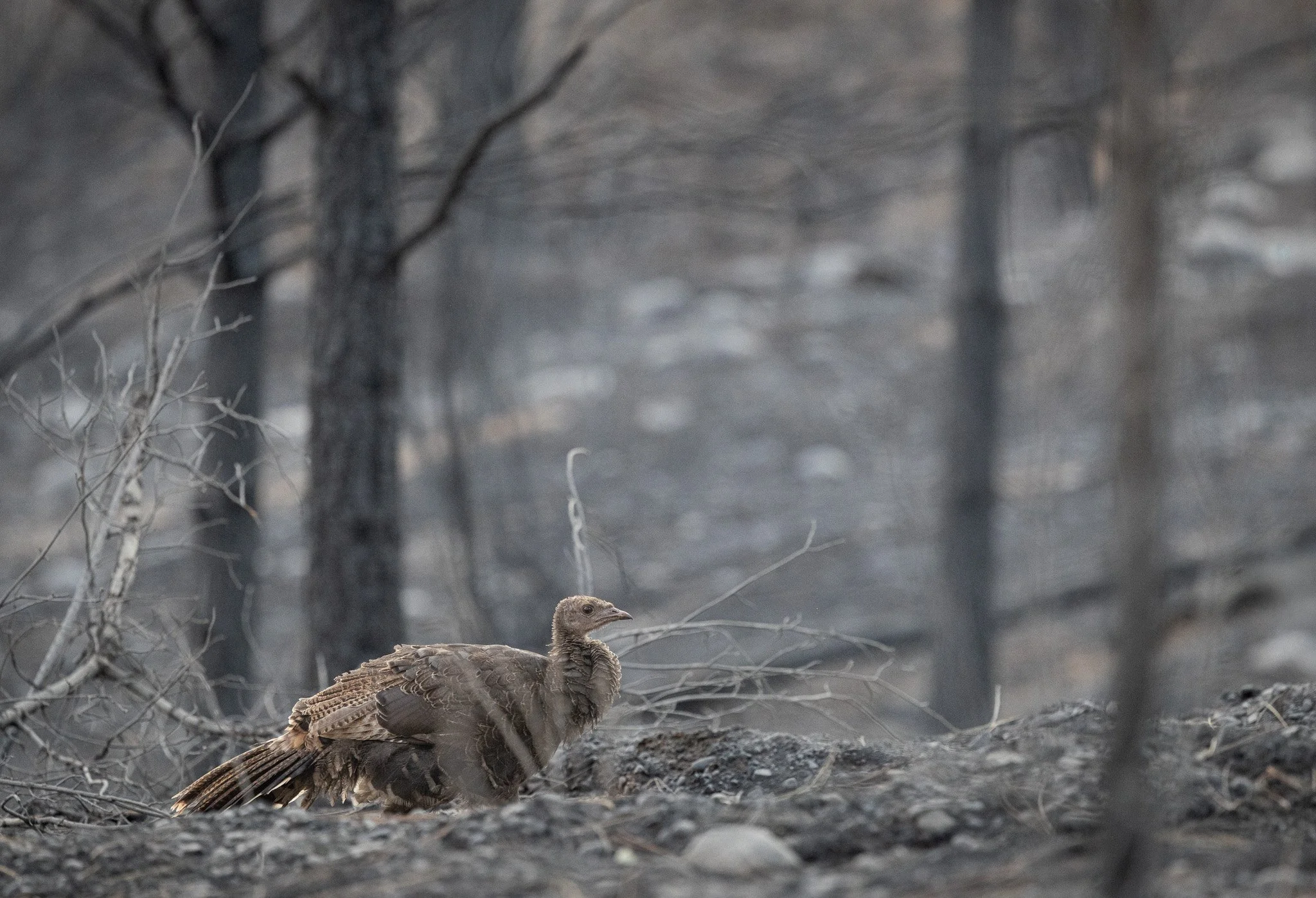
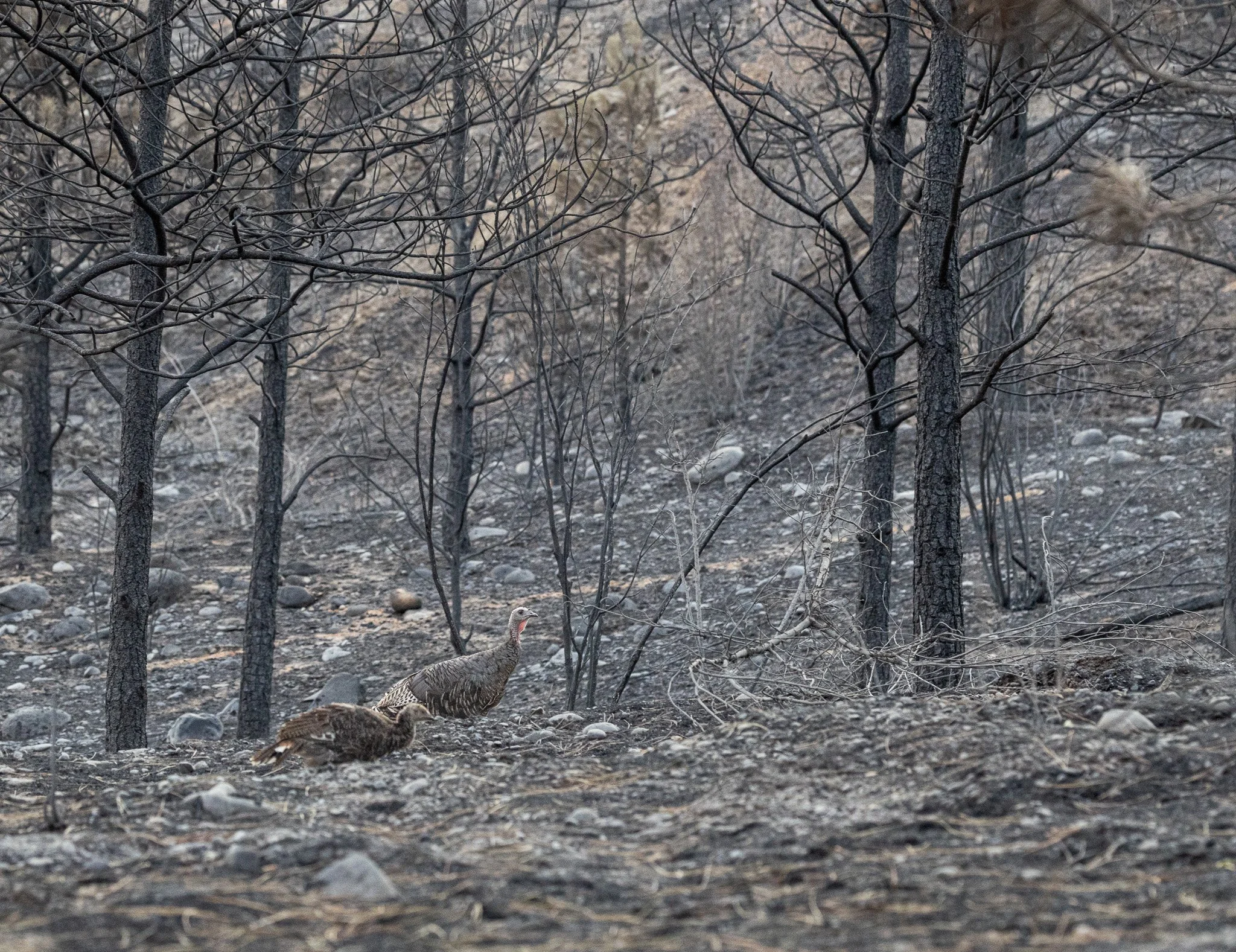
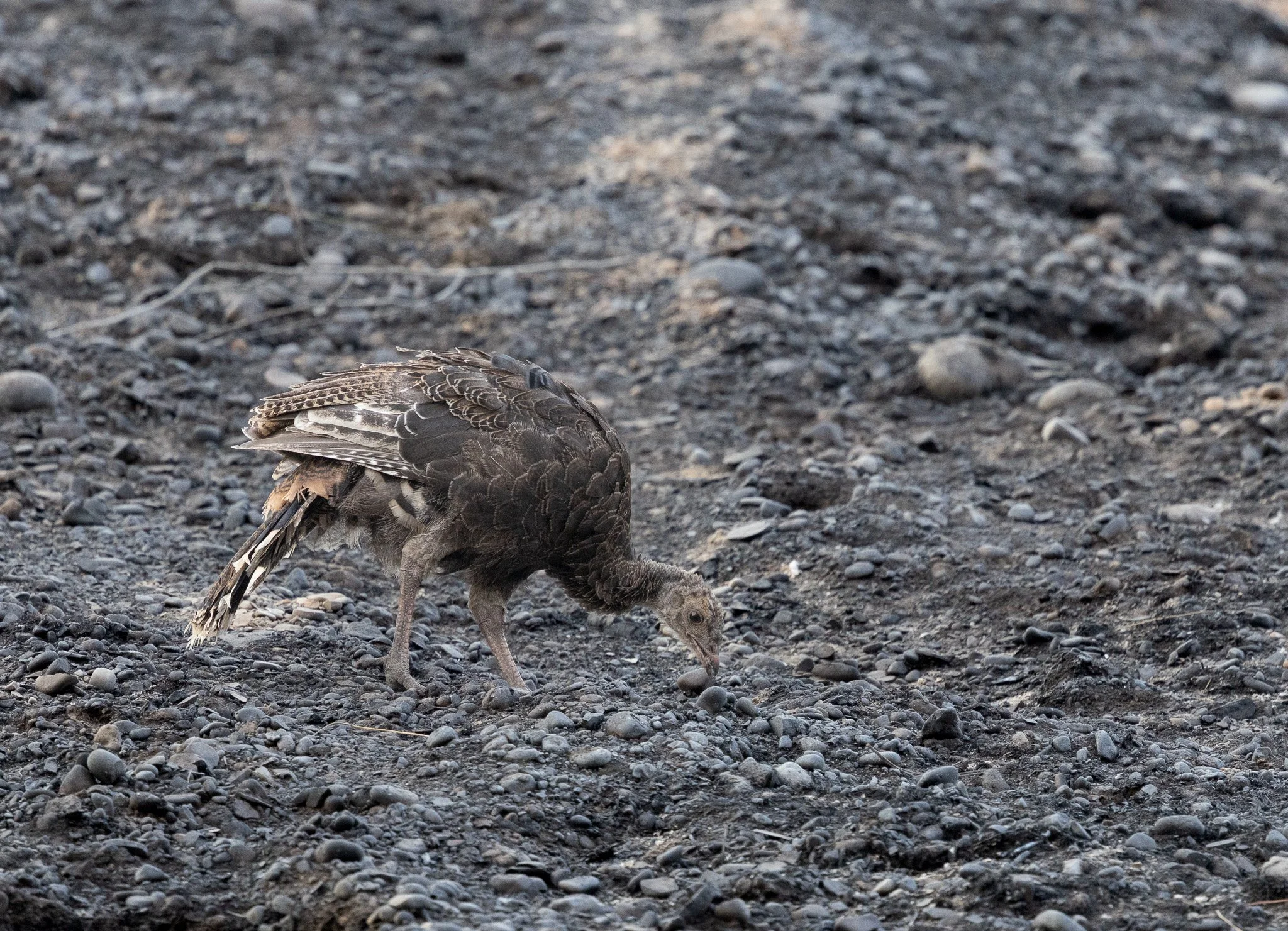
I spent a few minutes taking photographs before quietly moving on. They had enough stress to deal with without me adding to it. As I watched them disappear into the burned landscape, I realized how much lighter I felt seeing them.
The fire had taken so much, but not everything.
I slowly made my way toward the Spokane River, carefully scanning the landscape for movement or sprouts of green. A loud crow buzzed past me, seemingly on a mission, but other than that and the turkeys, I saw little evidence of life. The area was still void of lovely bird noises.
The river neared, and I crossed the river road that, along with the Spokane River, separates my little corner of Riverside State Park from most of the park. I started down the dirt road leading to a small stretch of river that very few people visit.
I could see the riverbank almost immediately, and my heart leaped as bright green came into view. What I saw was so incredibly unexpected. A large swath of land right next to the river had escaped the flames and remained an oasis in a desert of burnt trees and ground. The fire had jumped the river and somehow skipped right over the top of these lush bushes, some covered in beautiful yellow flowers.
I stopped. I listened. The birds. The songs. Oh my heart!
Though I had my camera with me, I didn’t spend much time looking through the viewfinder. I slowly sat down on a large gray rock, its bottom half disappearing beneath the shallow water. My breathing slowed. My eyes soaked in the surreal scene. The green felt almost impossible against the backdrop of blackened trees. The birdsong did too, echoing through a part of the park that had been silent less than twenty minutes earlier.
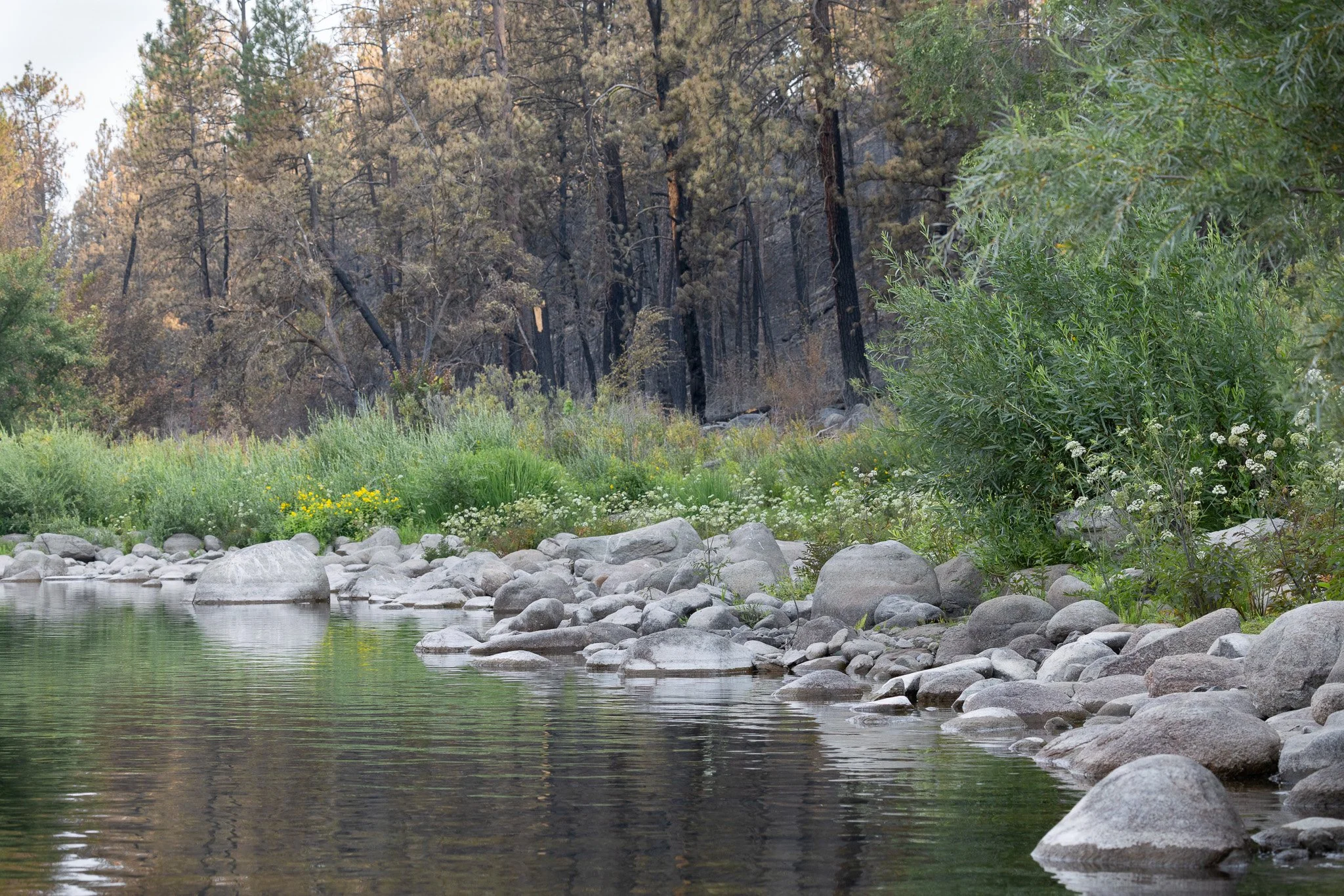
I sat there for a long time, taking it all in. The green. The flowers. The birdsong. I had been walking through a landscape that felt lifeless. Here, life along the river seemed untouched by the devastation only a short distance away.
For the first time since the fire, I felt a little less heavy. The grief wasn't gone. But I could now see that this was not the end of the story.
I grabbed my camera from the rock where I had set it an hour earlier and stood up to take it all in one more time. Then I started the climb back up to the road above. The landscape changed quickly, and before long I was walking through the charred trees once again.
Though not part of my normal hike, I could see that little spot of life becoming part of my morning.
I was lost in thought, writing Trevor a text to let him know I would be home soon, when I saw movement out of the corner of my eye. I turned slowly and saw her. A single mule deer doe. She was not close. She stood frozen, looking at me as she tried to determine whether I was a threat.
Injured doe in Riverside State Park. Taken with my cellphone from a distance.
I could see what looked like burn marks or some sort of injury on her shoulder. We continued to stare at each other. And then she slowly began to walk away. A limp confirmed the injury. She continued on but stopped one more time to look back at me to ensure I still remained a safe distance away.
She was alive.
I watched her until she disappeared from view. She wasn't untouched by the fire. Neither was this landscape.
And neither was I.
When I got home, I told Trevor about my hike. The birds. The green riverbank. The turkeys. The injured doe. As I talked, he smiled.
"Come with me," he said.
He grabbed my hand and walked me down the stairs to the empty lot next to our house that had burned ferociously just two weeks earlier. He pointed toward the middle of the lot.
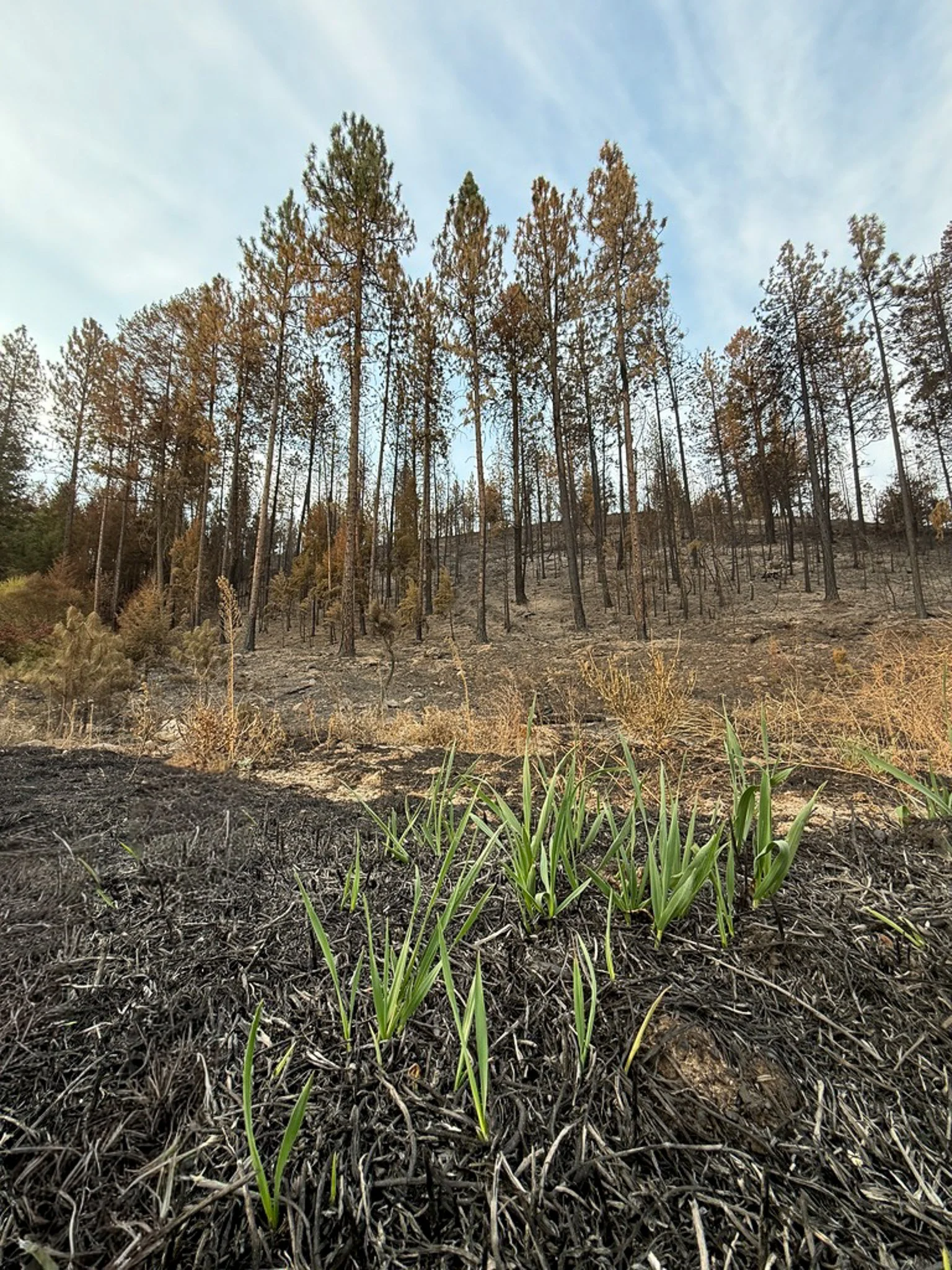
Pushing through the ashes were small tufts of green grass.
"Things may not look the same as you're used to," he said, "but the ground still lives. Someday your trails will be green again, and you will love those trails even more."
And for the first time, I could see it too.