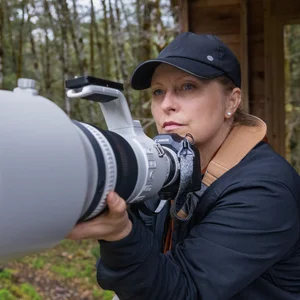
Haida Gwaii, British Columbia | April 29 - May 6, 2026
A Personal Review
On place and respect
The photography workshop was held in Haida Gwaii, on the traditional, unceded land of the Haida Nation. The Haida people have lived here for thousands of years, and their culture is still very much alive in these islands.
As a visitor and photographer, I understood that I was on land and water with deep cultural, historical, and ecological meaning. The forests, shorelines, and ocean channels we explored are more than just beautiful places; they have been cared for by the Haida people for many generations.
While I was there, I felt responsible to move quietly, pay close attention, and remember that my visit was short compared to the deep connection the Haida people have with this place.
Quick note before we start
This review is based on my personal experience, and someone else’s experience may look completely different. I review workshops through the lens of my framework and criteria, which you can read here:
If you’re curious why I do workshops and why I review them, you can read that here:
👉https://www.mywildlifechronicles.com/journal/why-i-do-photography-workshops-and-review-them
At a Glance
Torrens Island, Haida Gwaii
Type: This was a blend of a photography workshop and a tour
Primary subject: Landscape
Workshop leaders: Viktoria Haack and Monika Deviat
Accommodations included?: Yes
Food included?: No
Group size: 9 plus two instructors
Shooting schedule: Golden hour(s) and throughout the day
Physical demands: Mostly low. There was a notable hike (7 miles) on one day that participants could opt out of.
Overall feel: Well planned, strong communication, and a good balance of shooting time and cultural tours.
Best fit for: Beginner- to advanced-level photographers interested in visiting Haida Gwaii and experiencing local culture.
Where This Was
This photography workshop and tour took place in the remote archipelago of Haida Gwaii, off the northern coast of British Columbia. The islands sit about 60 miles from the mainland, northwest of Vancouver Island, surrounded by open Pacific waters. The archipelago covers roughly 3,700 square miles and includes about 150 islands within a coastal temperate rainforest. Dense forests thrive under constant Pacific moisture, shaping the landscape. The area is rich in biodiversity, and there are fewer than 5,000 residents who call this land home year-round.
Getting to Haida Gwaii from Spokane, Washington, seemed simple on paper, but it turned out to be quite a long day. Spokane to Vancouver, BC, and from there we took the one Air Canada flight per day from Vancouver to Haida Gwaii. This flight landed in Sandspit on Moresby Island in Haida Gwaii, and from there we took a ferry to Graham Island, which would be our home base in the quaint little town of Skidegate, British Columbia. From the time I left my doorstep to the time we arrived at our destination, it was around 13 hours.
As we crossed on the ferry, the smell of the ocean hit me, and everything felt peaceful. The landscape opened up into dense forest, with mountains stretching out in every direction, some still holding snow even in early May. It felt remote in a way that was hard to compare to anywhere else I’ve been. I was so looking forward to spending the next week here exploring the island, getting a glimpse into the rich culture, and learning from Viktoria and Monika!
Why I Chose This Workshop
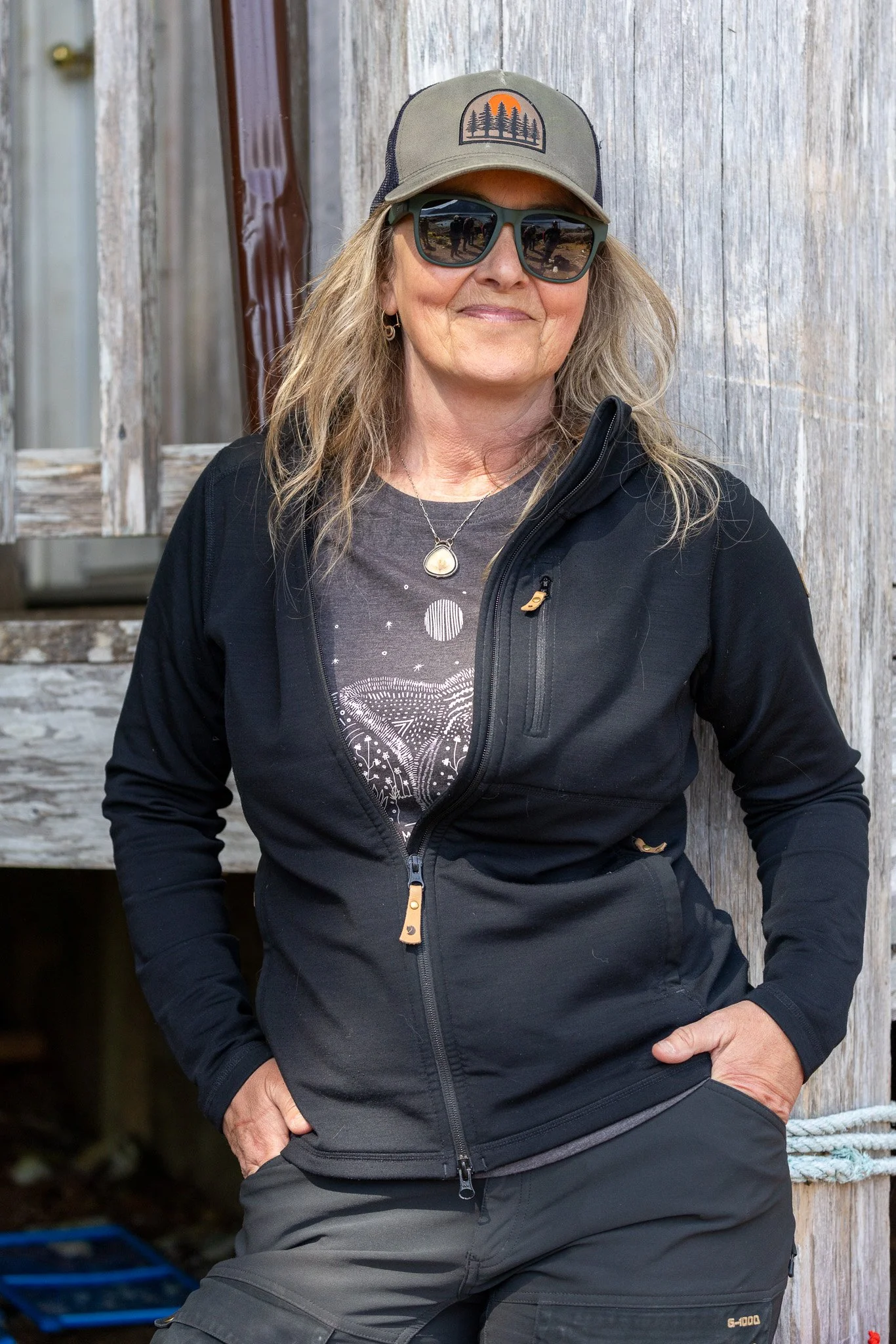
Viktoria Haack
I started this photography journey at the beginning of 2025 and fell madly in love with wildlife photography. All of the learning that I have done, all of the camera setups I have employed, and all of my practice have been centered around just that. Wildlife. I just love it.
But I can see my tastes changing when it comes to my wildlife shots. I want to include more. I want to tell a tale of how the animal I am shooting lives. I want to include more of the environment. And as I have leaned into that more this year, it became quite clear. I know nothing about landscape photography. If I am working on a small in-frame shot, how do I compose the landscape around it? And that, my friends, is why I chose this workshop. To learn landscape photography.
There are hundreds of landscape workshops out there: in-person, online, and mentorship classes. But I was looking for something specific. I wanted to learn not just the basics of landscape photography, but also how to capture a certain type: fog, rain, dark clouds. You know…moody shots. The kind where you can feel the cold and rain, where you sense the fog and moisture in the air. That’s what I wanted.
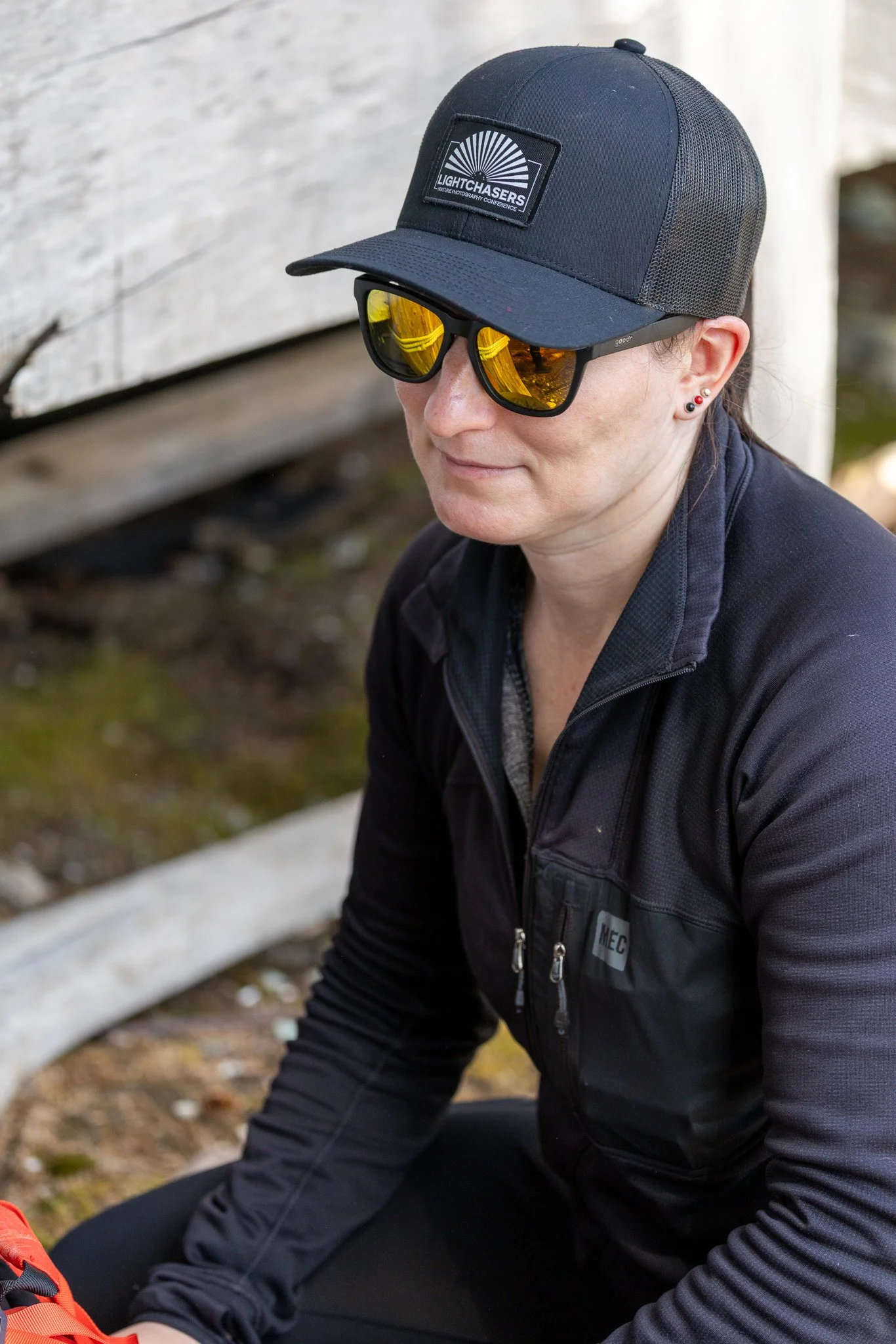
Monika Deviat
Naturally, Viktoria Haack came up in my search for this type of landscape photography. I’ve followed her for about a year and love how her shots make me feel as though I’m experiencing them. Her landscape photography screams “moody.” By chance, she was leading a workshop in Haida Gwaii a month later, and there was one spot left. She was co-leading with Monika Deviat, whose talents, as I quickly discovered, are just as special as Viktoria’s. I was in. I booked it.
I must be vulnerable for a moment. I didn’t book this workshop expecting only landscapes in Haida Gwaii. How could there not be wildlife everywhere? I will say, because of this thinking, I learned a lot about myself in this workshop.
Workshop vs Tour, and How That Shaped the Experience
I draw a clear distinction between workshops and tours. In my mind, workshops include intentional instruction alongside access to a location or species, while tours tend to focus primarily on access. Neither is inherently better, but the distinction matters to me because it shapes expectations around teaching, support, and learning.
I would qualify this experience as both a workshop and a tour, a true hybrid. By this, I mean that the experience deliberately integrated the intentional instruction of a workshop with the immersive location-based access characteristic of a tour, making the educational and exploratory aspects equally central.
When we were out shooting, it was clear it was a workshop. Monika and Viktoria were in 100% teaching mode. Making sure people had what they needed, that questions were answered, and that inspiration was being found. They did it all and were very focused on the instructional experience.
There was also a tour element: we visited the Haida Gwaii Museum one day, took a day-long boat expedition to original Haida villages another day, heard long-told Haida stories from our accommodation host, and visited a local master carver to watch him carve a totem.
Overall, the experience was very well curated, offering a good balance of workshop and tour activities.
Ethics
I did not observe any ethical concerns during the workshop. Wildlife remained at a distance, avoiding encroachment or disruption of natural behavior. When photographing people was an option, Monika and Viktoria obtained permission in advance, and we consistently respected those boundaries.
Time of Day and Light
We had several golden-hour shoots in both the morning and evening. A few mornings were unstructured, which gave us the chance to watch the sunrise on our own. The view directly across from our accommodations was stunning and made it easy to step out quickly with a camera right after waking up.
The workshop schedule was full, so shooting at midday was part of the experience if you wanted to participate in everything Viktoria and Monika planned. Several hikes offered canopy cover, which helped create softer, filtered light.
Aside from the last day, conditions were consistently sunny, which gave me valuable practice working in harsh light. Much of that time was spent on the beach, so it was hard to complain.
Sunrise across from Jags.
Mid-day shooting.
Evening on the beach.
Accommodations
We stayed at a place called Jags, and I was very pleased with the accommodations. It’s been family-owned and operated for about 30 years, and they describe it as a guest house, which fits. It really does feel like you are staying in someone’s home.
The family also runs a bakery on site, and it was honestly hard to ignore. They clearly take a lot of pride in it. The cinnamon rolls alone were worth it, soft and melt-in-your-mouth good, and the breakfasts were hearty and high quality. The place was packed every morning, with people lined up at the door waiting for it to open, which wasn’t surprising once you tried it.
The rooms were quaint, clean, and comfortable. Mine had a small kitchenette with a microwave, fridge, sink, and basic utensils, which turned out to be nice after we ran to the grocery store for snacks and quick lunches.
Overall, Jags was a great place to stay, and I’d recommend it without hesitation to anyone visiting Haida Gwaii. Check out their website: StayatJags.com or their Instagram: StayatJags
The local restaurants exceeded my expectations, as I was expecting small-town diner-type food. Nothing could be further from the truth. Each restaurant we visited served fantastic food, and the service was friendly and efficient. I think we hit most of the establishments in town that were open at the front end of the tourist season, and they were all delicious!
Group Size and How It Affected the Experience
There were 9 participants in the workshop, which is a little larger than I usually prefer. That said, since wildlife was not the focus and there were two instructors, the group felt very manageable. The locations were expansive, so we were able to spread out easily, and I never felt crowded.
Monika and Viktoria did a great job communicating with businesses ahead of time, so our group was expected wherever we went, which made things run smoothly.
The group dynamic was excellent. There was a wide range of experience and styles, and people were open to sharing ideas and techniques when asked. I tend to have a lot of questions when I’m learning something new, and it was nice to be in a group that welcomed that.
Ultimately, the group was easy to be around and added positively to the overall experience.
Instruction Style
Viktoria and Monika had a very hands-on teaching style. They were right there when you needed help, but also good at giving space when it was clear you were in your own process. If you had a question while shooting, they would step in right away and guide you through it.
They were extremely approachable. I never hesitated to ask questions, and it actually felt like they enjoyed them. They were also very proactive about checking in. Because some locations were so spread out, they used walkie-talkies to stay connected and ensure everyone had what they needed. Despite the group size, I always felt like I had plenty of individual attention.
When they were working with you, it never felt like formal feedback. They were right there with you, offering suggestions as you went. One thing that stuck with me was Viktoria talking about using natural lines to pull your eye through an image. That was one of those “of course” moments. It changed how I started looking at my compositions.
They were great at working with people at different experience levels. The group had a mix of backgrounds, and it felt like they really took the time to understand what each person wanted from the workshop. Experienced photographers could work on their own, while those of us who were learning got the help we needed.
Most of the instruction happened one-on-one rather than in a group setting, which I appreciated. They focused a lot on composition and technical settings, but they also explained why you were doing something, not just what to do.
There was plenty of space to explore your own style, and experimentation was encouraged throughout. It made the entire experience feel more creative and less structured, in a good way.
They were also fully present the entire time. Their cameras stayed in their bags for most of the workshop, which made it clear their focus was on us and not on getting their own shots.
Overall, Viktoria and Monika were attentive, easy to ask questions of, and genuinely seemed to care about whether we were meeting our own standards of success.
The Cultural Experience
To be perfectly honest, the cultural experience stole the show for me, and I didn’t even see it coming! Viktoria and Monika did a fantastic job of weaving Haida culture into our daily plans, and it was probably my favorite part about being on Haida Gwaii.
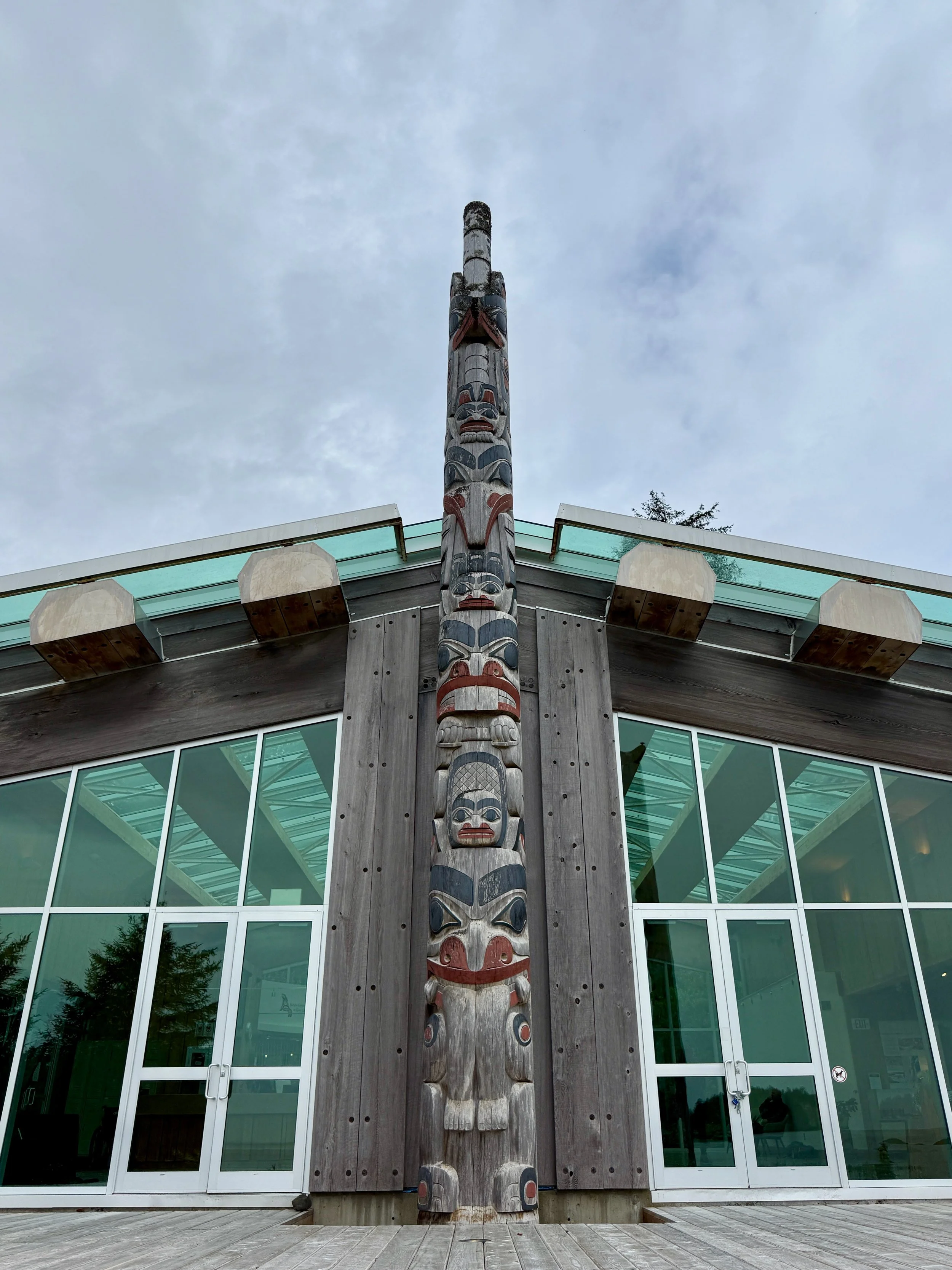
Haida Museum
On our very first day, we headed to the Haida Gwaii Museum in Skidegate before we even had our first group shoot. It was clearly intentional. Monika and Viktoria wanted to make sure we had a window into Haida culture and the history of what they have gone through and overcome as a nation over hundreds of years. The museum is beautiful and very thoughtfully curated. The strength of the Haida people is just…wow.
During this trip to the museum, we had our first live totem-carving experience. The artistry and dedication of the master carvers hung in the air as the wave of freshly shaven wood hit your nose right when you walked into the carving area. I left feeling grateful that they had chosen this as our first stop, for a tiny glimpse into such a rich culture.
Our next experience was an invitation to hang out with Jesse Brillion and The Totem Design House for a more intimate totem-carving session. We spent time watching, asking questions, listening to stories, and taking pictures (with permission). I felt like I was watching something very special and was honored to be part of a group that was invited to watch.
My favorite day of the entire workshop was our boat tour with Haida Style Expeditions. It was an all-day event in which we visited sacred Haida villages, spent time at a sea lion rookery, and heard many stories about the Haida culture, both past and present. Robert and Rhonda, our Haida Style guides, were incredibly knowledgeable, personable, and fantastic storytellers! A highly recommended tour if you are visiting Haida Gwaii.
By the end of the trip, it was clear that the cultural experiences were a standout for me. They added something meaningful that went beyond photography, and I’m really glad Viktoria and Monika made it such a central part of the workshop.
Totem carving at Haida Museum
All smiles on the boat with Allie!
The Totem Design House totem carving
Rhonda - Haida Style cultural guide.
All day tour with Haida Style Expeditions
Robert - Haida Style captain
Logistics and Feeling Cared For
This was another area where both Viktoria and Monika shone. Every detail of the trip was carefully planned, and they communicated those plans skillfully. A group chat was set up long before the trip even started, and they encouraged questions of all types ahead of time. To be clear, there weren't a ton of questions because they did such a good job of pushing information to us via email from the get-go.
Each evening, plans for the following day were sent out via the chat. What time we were meeting, where we were going, and what meals we needed to pack. All very well orchestrated. Lack of communication was absolutely not an issue with this team.
I have come to find that, after doing workshops for the last year, feeling cared for during these trips is very important to me. These trips are not cheap, and I do expect a high level of coordination and support. From my perspective, this is what made Monika and Viktoria such a great team. Monika was the expert coordinator and, honestly, the “fixer of all things” while Viktoria ensured people felt well looked after and had everything we could possibly need. Such a good play of strengths.
When Things Didn’t Go as Planned
It is really hard to say that anything went wrong, as Monika and Viktoria had contingency plans for everything. They assessed the weather for the next day every evening and adjusted their plans accordingly. So nothing felt like it didn’t go as planned, as there was always something planned! We had no major weather events to work around.
On the long hike day, enough of the group decided to stay back that Viktoria stayed back and chauffeured individuals to different shoot locations. I appreciated that decision as it showed their willingness to be flexible and bend to the needs of the group.
Reflection
To be completely honest, it took me a few days to find my footing on this trip from a photography perspective. I struggled at first. I wasn’t always sure what I was supposed to be looking for, and I didn’t feel a strong creative connection to the landscape. With wildlife, the subject is obvious. With landscapes, I found myself staring at scenes and not knowing where to start.
The weather also didn’t line up with what I had in my head going into the trip. I was expecting more of the moody, foggy, rain-soaked conditions Haida Gwaii is known for, and instead we had a lot of consistent sunshine. It made for beautiful sunrises, but it took me a bit to adjust.
I’ll admit, I got a little frustrated with myself early on. I found myself slipping back into looking for wildlife just to feel more comfortable, instead of leaning into what I was there to learn.
About halfway through the workshop, something shifted. I had a bit of a moment with myself. I realized I had spent half a day getting to this incredible place, was surrounded by amazing people, and had the opportunity to learn something completely new. It felt like a waste to stay stuck where I was. From that point on, I made a conscious decision to lean in and figure it out.
Once I did that, everything started to change. I began to enjoy the problem-solving side of landscape photography, looking at a scene and asking myself how I wanted to approach it instead of feeling stuck by it. The last half of the workshop went by quickly, and I found myself much more engaged and genuinely enjoying the process.
In the end, this experience pushed me outside my comfort zone in a way that I needed. It took me some time to get there, and ultimately I did learn a lot. It was also a good reminder that mindset matters just as much as skill.
When I step back and think about the workshop as a whole, what stands out most is how well Viktoria and Monika blended photography, culture, and time to just experience Haida Gwaii. But more than anything, it was Haida Gwaii itself that left the biggest impression on me. The people, the land, and the stories are something I’ll carry with me for a long time.
If you are considering visiting Haida Gwaii as a photographer, this workshop offers a really thoughtful balance of cultural immersion and learning from two incredibly skilled instructors.
Thank you, Viktoria and Monika, for all of the care and preparation that went into making this such a well-rounded experience.
PS: I will always be a wildlife photographer at heart! Haida wildlife:
Read my workshop review framework: https://www.mywildlifechronicles.com/journal/how-i-review-photography-workshops-and-the-framework-i-use
Read why I do workshops and why I review them: https://www.mywildlifechronicles.com/journal/why-i-do-photography-workshops-and-review-them